- Equipo de Ventas
- May 6, 2026
- 3:35 pm
The 2026 World Cup is already fueling a frenzy in the real estate market. The talk of the town is tourism, infrastructure, and—naturally—capital gains (plusvalía).
But there is a question very few are asking: Does a World Cup actually create real estate value?
The answer is more complex than it seems. Global events don’t create markets; they accelerate them. Understanding this distinction is what separates a strategic investor from a speculator.
1. Global Events Are Catalysts, Not Creators
This is the first principle of international real estate: events act as catalysts for dynamics that are already in play.
A city’s development is boosted by a global event only if it already possesses:
Solid infrastructure and connectivity.
Established tourism demand.
Consistent private investment.
Organic economic growth.
Without these fundamentals, an event doesn’t transform a city; it merely exposes its flaws. The impact is never automatic—it is selective.
2. The Mexican Powerhouses: CDMX, Guadalajara, and Monterrey
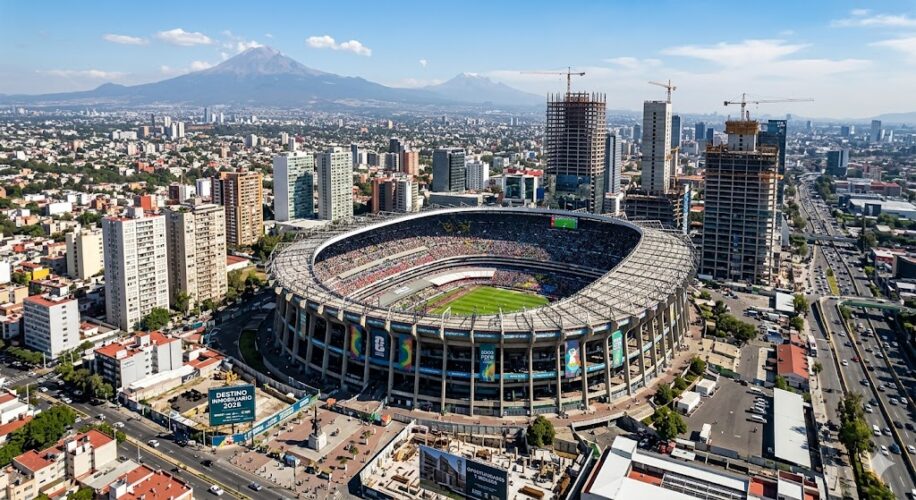
In Mexico, the tournament will be hosted in three core hubs. These cities already boast structural conditions that sustain long-term growth:
International airports and logistics corridors.
Robust hotel infrastructure.
Active corporate and residential markets.
The World Cup won’t “create” these markets; it will intensify their activity. That is a massive difference for your ROI.
3. The #1 Mistake: Buying for the Event, Not the Market
I see investors making this mistake daily: buying based on emotion rather than fundamentals.
The event lasts weeks; the market lasts decades.
When a decision is driven by hype, risk skyrockets. The right question isn’t “Will the World Cup happen?” The right question is: “Will there be demand once the fans go home?” That is the line between an investment and a gamble.
4. Lessons from History: The “White Elephants”
The history of global events is littered with “White Elephants”—costly infrastructure that fails to sustain itself economically after the final whistle.
| Event | Outcome | Real Estate Lesson |
| Brazil 2014 | Stadiums built in cities with low permanent demand. | Without demand, there is no profitability, only maintenance debt. |
| South Africa 2010 | Massive investment with low structural transformation. | Visibility does not equal economic restructuring. |
| Qatar 2022 | Modular/Temporary infrastructure (Stadium 974). | Sometimes the best strategy is planning the “exit” from day one. |
5. The “Plusvalía” Narrative: A Dangerous Sales Pitch
When a global event is announced, a seductive narrative emerges: “Buy now because prices will automatically soar.”
Capital gains (plusvalía) are not automatic. They depend on permanent factors: employment, mobility, security, and services. Events generate temporary spikes in activity; structures generate permanent value.
6. Where the Real Opportunity Lies
The 2026 impact will be real, but highly concentrated. Strategic investors should focus on:
Short-term rentals and hospitality in prime zones.
Logistics corridors near host venues.
Professionally operated residential projects.
Mexico holds a structural advantage that goes far beyond football: Nearshoring, a growing middle class, and its proximity to the U.S. The World Cup doesn’t create these conditions—it simply puts them in the global shop window.
The Bottom Line
In real estate, real opportunities aren’t born from enthusiasm; they are born from analysis. The business isn’t the event itself—it’s what remains when the lights go out.
Are you investing in a market with foundations, or just a ticket to the game?
CTA — For Investors
If you are evaluating an investment in a World Cup host city, or looking to analyze a high-value asset before making a move, our team can help you separate the hype from the harvest.
Register here to schedule a strategy session with our team.
Because in real estate, the best investment isn’t the one that promises the most—it’s the one that stands the test of time.