- Dolores Islas
- June 27, 2026
- 10:13 am
In real estate, “scarcity” isn’t just a marketing buzzword. It is a powerful economic variable.
Land cannot be multiplied. Historic centers cannot expand. Buildings with centuries of history cannot be rebuilt. In a world of mass production, assets with authentic identity are becoming increasingly rare.
When looking at real estate investment, the most critical question shouldn’t just be “How much does this property cost today?” Instead, savvy investors ask: “How impossible will it be to replicate this asset in 10, 20, or 30 years?”
That is where the true business of scarcity begins.
1. Scarcity as a Powerful Competitive Advantage
A real estate asset achieves true scarcity through a unique combination of factors that create an insurmountable barrier to entry:
Prime Location: Historic centers, walkable neighborhoods, consolidated cultural districts, or beachfronts.
Strict Regulation: Protected properties, height restrictions, and density limits that prevent new competition.
Historical Legacy: Cataloged buildings, ex-convents, haciendas, and vernacular architecture.
Materiality & Craftsmanship: Adobe walls, quarry stone (cantera), ancient timber, interior courtyards, and grand proportions that are no longer built today.
Experiential Value: Spaces designed not just to be bought or rented, but to be deeply lived and experienced.
Even with unlimited capital, a competitor cannot simply build a replica of a centuries-old heritage property.
2. The Economic & Environmental Case for Restoration
One of the biggest misconceptions in real estate is that restoration is always more expensive than building from scratch. The reality is far more strategic.
The Green Premium
According to the American Institute of Architects, reusing an existing structure can prevent between 50% and 75% of the embodied carbon emissions that a new build would generate. This is achieved by conserving the original foundations, walls, and materials.
This matters immensely today:
Global Impact: The building and construction sector is responsible for approximately 32% of global energy consumption and 34% of global $CO_{2}$ emissions. Furthermore, materials like cement and steel alone account for nearly 18% of global emissions (UNEP).
The New Luxury: The premium market increasingly rewards projects with a clear environmental, cultural, and patrimonial narrative. Future luxury must be conscious, authentic, and impossible to clone.
Strategic Technical Savings
Restoration doesn’t mean spending less on everything; it means spending differently.
| Where You Save | Where You Must Invest Properly |
Existing Structure: Saves on excavation, demolition, foundations, and grey work. | Structural Diagnostics: Rigorous testing and wall reinforcement. |
Historical Density: Preserves heights and volumes impossible to get permitted today. | Modern Infrastructure: Entirely new electrical, plumbing, and moisture control systems. |
Original Materials: Restoring original stone, wood, and ironwork adds soul and premium value. | Specialized Craftsmanship: Expert labor and extended execution timelines. |
Built-in Narrative: The history is already in the walls, drastically lowering brand-building costs. | Regulatory Compliance: Navigating permits with heritage authorities. |
The Investor’s Rule: The goal is never to romanticize restoration, but to know exactly when the final market value justifies the technical complexity.
3. Case Study: Cocoon Oaxaca Founder Collection
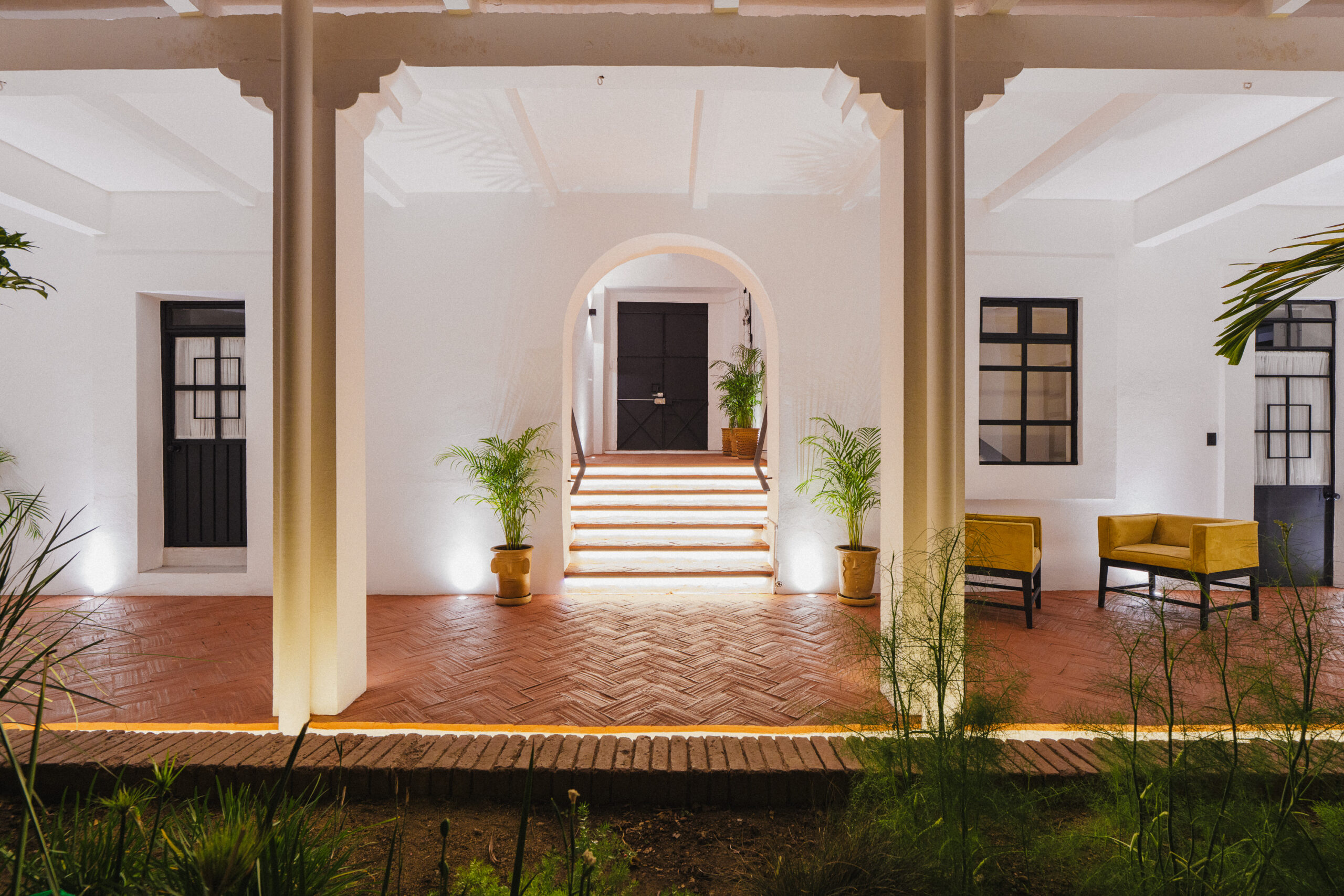
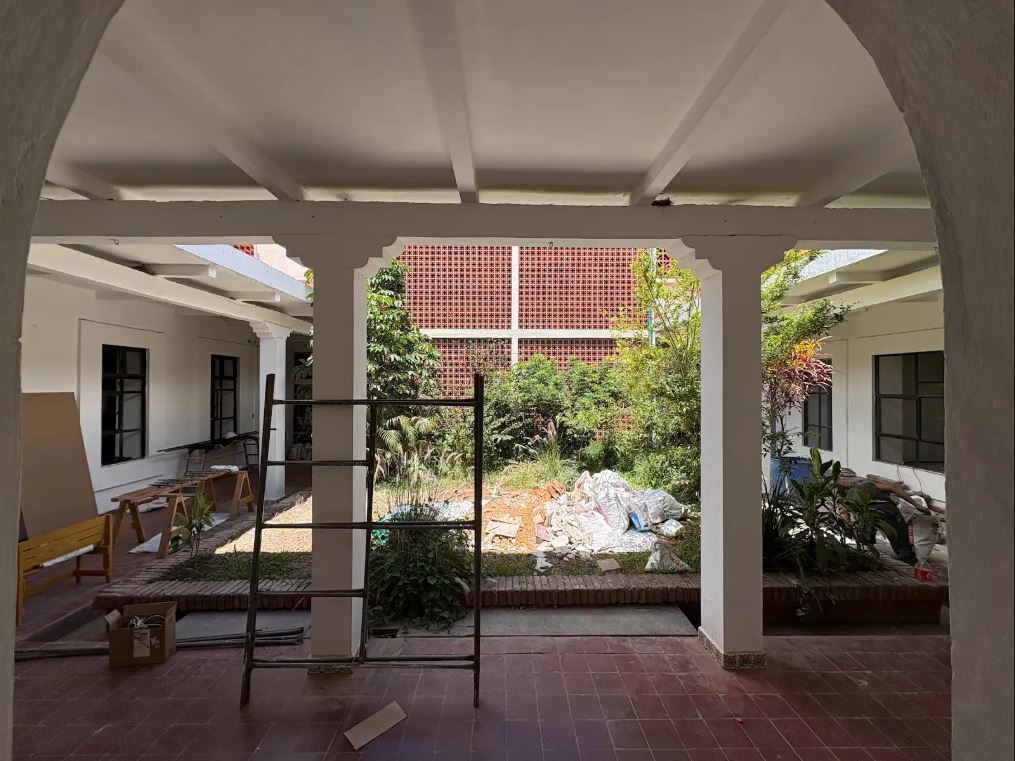
A perfect example of this investment thesis in action is Cocoon Oaxaca Founder Collection. This project takes a historic property and transforms it into a boutique hospitality asset with deep identity, without erasing its past.
Instead of building just another hotel, Cocoon preserves a building that already possesses memory, scale, and character. It focuses on decisions that balance heritage with modern comfort:
Meticulously choosing what to conserve, reinforce, and intervene.
Seamlessly integrating modern engineering without destroying the building’s essence.
Creating contemporary luxury without turning the space into an artificial stage set.
Cocoon doesn’t compete on a price-per-square-meter basis. It competes on history, location, scarcity, and unforgettable experiences.
4. Global Proof: Heritage as an Economic Engine
Adaptive reuse of historic buildings is a proven driver of economic growth and high-end tourism worldwide.
The Europe Trend: In Italy, France, Spain, and Portugal, heritage is the backbone of tourism. Studies show that each additional UNESCO designation correlates with a direct increase in international visitors.
The Italian Model: Research on UNESCO sites in Italy revealed that five years post-designation, the taxable per capita income in those areas increased by approximately 2%.
The Belgium & Scotland Examples: In Belgium, historic religious complexes have been converted into vibrant university and residential spaces. In Scotland, institutional heritage buildings are successfully transformed into luxury hotels as a mechanism for urban regeneration.
When heritage is abandoned, it deteriorates. But when it is thoughtfully repurposed, it generates economy, employment, and long-term conservation.
5. The Scarcity Checklist: Evaluating a Heritage Asset
Not every old property is a good investment. To ensure a heritage project is a profitable business rather than an emotional money pit, we evaluate five critical layers:
Physical Scarcity: Does another property like this exist? Can the location or unique architectural proportions be replicated today?
Regulatory Scarcity: Does it have heritage protection that limits new local competition from being built nearby?
Emotional Scarcity: Does the building tell an authentic story that can be leveraged into an iconic brand?
Commercial Scarcity: Is the market willing to pay a premium tariff or resale value for this unique experience?
Financial Scarcity: Are the restoration costs controlled so that the final asset is worth significantly more than the sum of the land plus the construction work?
When these five layers align, the property stops competing on price and begins competing in a category of its own.
Conclusion: The Luxury of the Future
For decades, luxury was measured in shiny marble, flash, and raw square footage. Today, the paradigm has shifted.
Sophisticated travelers seek spaces with soul. Institutional investors seek assets protected against market commoditization. Hospitality brands chase real stories.
Restoring heritage allows investors to build value across three dimensions simultaneously: Profitability, Property Value, and Legacy.
In a real estate market crowded with identical towers and cookie-cutter developments, the market compares by price. But when an asset is truly irrepetible, the market compares by experience, history, and belonging.
In an increasingly artificial world, the irreplaceable will always be the most valuable investment.
Want to dive deeper into this investment thesis? Listen to Episode 67 of the Real Estate y Negocios Podcast, where we break down how to spot these hidden gems. At Silméxico, we also believe that building heritage goes hand-in-hand with building opportunities. We proudly invite you to support the Lupita Project, an organization providing vital medical care to vulnerable children and families in Oaxaca. You can find a direct donation QR code at the end of the podcast episode.